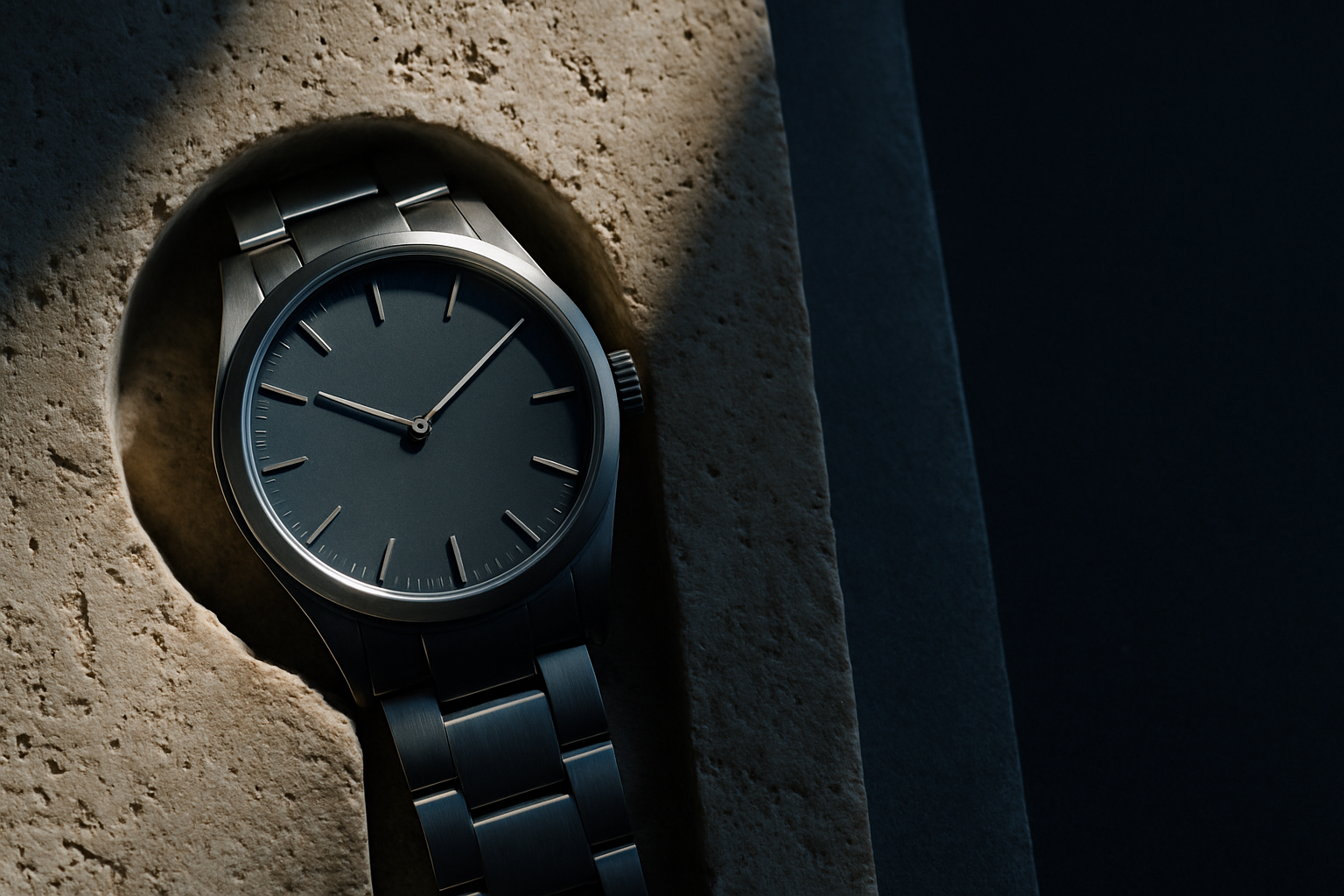
A new Greubel Forsey gets immediate respect on execution. Nobody who has handled the brand needs to be convinced that the hand-work is serious or that the mechanical display is meant to be studied up close. The harder test starts later, when buyers and dealers begin placing it against watches they use as recurring points of comparison rather than one-off spectacles.
Independent prestige still opens doors. F.P. Journe remains a shorthand for seriousness among experienced buyers, and that kind of standing still gets attention quickly. What it no longer does, at least in this part of the market, is settle the judgment. Once a watch is in front of informed collectors, the discussion usually shifts to what keeps drawing people back after the first round of admiration.
That is where the Datograph stays useful. Collectors return to it when they argue about chronograph seriousness, finishing quality, and long-horizon desirability. Those are not empty honors. They describe a watch that keeps reappearing in dealer talk, in private comparisons, and in the mental short list people use when they want to calibrate what top-level movement architecture and finishing should look like over time, not just on release week.
Greubel Forsey does not need to become that exact kind of benchmark to justify itself. Still, any major release from the brand runs into that standard sooner or later. Buyers at this level tend to...
A different kind of durability has also been gaining attention. Recent dealer commentary and editorial analysis have pointed back to shaped Cartier cases, especially the Tank family, as collectors reassess watches that win through proportion, versatility, and enduring design lineage. That renewed attention says plenty about the current mood. Plenty of experienced buyers still admire visible craft at the top end, but they are also giving more credit to watches that fit daily use and carry an instantly recognizable design history.
Placed between those reference points, Greubel Forsey looks strongest where it has always looked strongest: visible execution, intense presentation, and a design language nobody mistakes for someone else’s. For the buyer already active in high independents, that can be enough. They are paying for finishing they can inspect with a loupe, for construction that announces labor rather than hiding it, and for a watch that does not dilute its own taste in search of broader approval.
That strength also defines the limit. A visually forceful watch can command respect on first contact and still remain outside the small set of pieces that become common shorthand in dealer inventories, forum threads, and private recommendations. The Datograph sits inside that smaller set because people keep returning to it when movement finishing or chronograph hierarchy comes up. The Tank family arrives there from another direction, because proportion and wearability keep it relevant even when the owner’s taste changes around it.
Greubel Forsey occupies a narrower lane, but narrow appeal is not a defect at this level. In some cases it sharpens judgment. Casual buyers fall away quickly, and the people who remain usually know exactly what they are assessing. Admiration carries more weight when it survives close looking than when it rests mainly on scarcity or the general glow attached to elite independents.
That dynamic helps the brand more than it hurts it. Slower markets usually expose weak propositions because there is less appetite for buying on excitement alone. Greubel Forsey tends to benefit from that slowdown. Once the pace eases, buyers spend more time on finishing, architecture, and whether the watch delivers enough formal coherence to justify its scale and drama. Few brands invite that scrutiny so directly, and few come through it as cleanly.
Even so, scrutiny alone does not guarantee repeated return. One watch can impress as an object and still fail to become a regular reference point in comparative esteem. Another can look quieter, even conservative, and keep showing up because collectors trust its proportions, know how it wears, or use it as a baseline when judging a category. That split helps explain why shaped Cartier cases have regained steady favor while the Datograph still holds its place in serious chronograph debate. Each offers buyers a durable reason to revisit the watch beyond launch energy.
Greubel Forsey presses a different claim. It forces the buyer to decide how much they value uncompromising visible craft once the room stops reacting to spectacle. For some, that question is enough to secure the watch’s place in a collection. For others, the absence of broader market recognizability or easier daily use will keep it from becoming a default recommendation, however high the quality is.
That leaves the brand in a strong but specific position. A major Greubel Forsey release belongs in a wider editorial frame because it tests the current standard at the top end: whether extreme execution by itself can hold attention once comparison sets in. The Datograph still answers that test through chronograph standing, finishing, and long-horizon desirability. The Tank family answers it through proportion, versatility, and lineage. Greubel Forsey answers it through visible hand-work and mechanical conviction made tangible. The launch can impress in a day. Repeated return is earned over years.