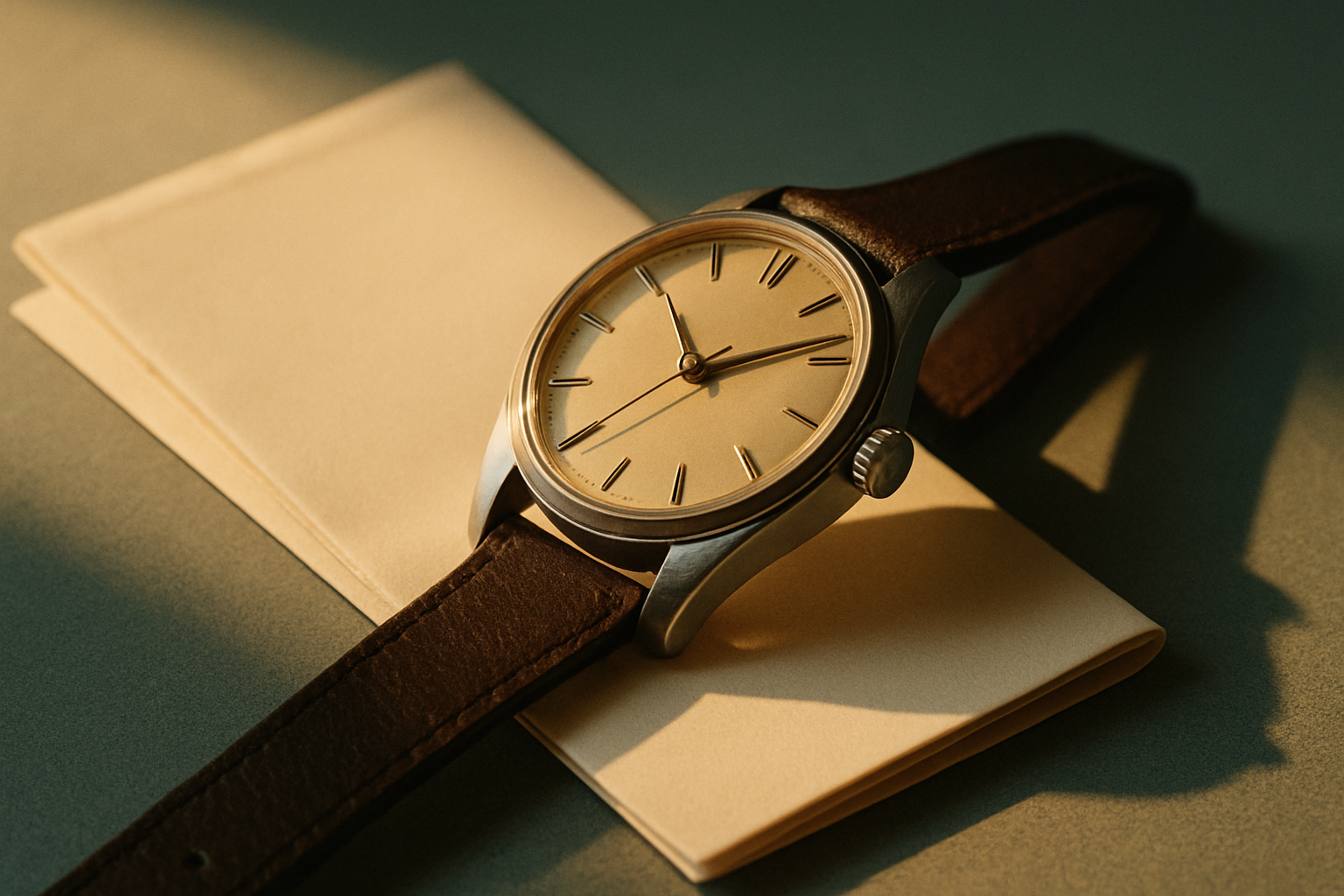
Vintage IWC watches that collectors call "Calatravas" deserve to be judged as a coherent subset of mid-century dress watches, not as understudies for Patek Philippe. Their appeal is easier to explain when you stay with the object in front of you: slim round cases, clean bezels, balanced dials, and the kind of proportion that gets a fairer reading after too much time spent on louder sports models. This category works when the watch can carry scrutiny on its own.
That shift in attention is familiar. One of the cleaner observations in recent dress-watch coverage is that interest returns when collectors want clarity over spectacle. After a long run of noise, quieter icons get looked at again with fresh eyes. Vintage IWC dress watches benefit from the same rotation in taste, especially when buyers stop asking whether they deliver Patek status and start asking whether the watch is visually resolved.
Collectors use "IWC Calatrava" as shorthand, and the term only helps if it stays descriptive. At its best, it points to a recognizable mid-century formula of round formal cases, restrained dials, and measured proportions. Used carelessly, it turns into a sales tag that pushes unrelated or mediocre examples into the same search results as the good ones.
Minimal design raises the inspection standard. Calatrava coverage tends to hold up when it explains why restraint, proportion, and line count in high watchmaking instead of praising elegance in...
That is why weak examples get exposed so brutally. There is no rotating bezel, textured dial, or oversized case to distract the eye. Soft case edges flatten the watch. Heavy polishing takes away the tension between a slim bezel and the dial opening. Once that definition goes, the whole watch starts to look generic, even if the name in the listing sounds promising.
Patek still frames buyer perception because the Calatrava name remains active in the market. A recent Sotheby’s retail listing for the Calatrava 5227R-001 described a 38mm rose gold automatic wristwatch with date, a 2014 example listed at 29,700 USD. That tells you almost nothing about what a vintage IWC should cost. It does show how firmly the Calatrava label still anchors the broader conversation around restrained round dress watches.
IWC can sit inside that conversation without asking anyone to confuse the brands. Shared mid-century design language is real. Brand hierarchy is real too. Most experienced buyers can hold both ideas at once, which lets them judge an IWC by its own case line, dial balance, and state of preservation rather than by borrowed prestige.
A quieter market often improves the reading. Recent commentary around heavily exposed categories has made the same point from another angle: coverage gets more useful when it explains demand shifts instead of repeating scarcity stories. That lens helps here. Once momentum cools, you can see which watches have lasting visual appeal and which ones were riding on market chatter.
Dress watches force that kind of discipline. Buyers cannot lean as heavily on recognizability or constant exposure. They have to look at the practical things that separate a convincing example from a compromised one: whether the printing is crisp, whether the hands suit the dial, whether the bezel still feels slim rather than worn down, whether the case retains enough shape to keep the watch from looking washed out on the wrist.
The nickname can complicate shopping because it widens the funnel. As more vintage IWC dress watches get grouped under a Calatrava-style heading, average pieces enter the same lane as stronger ones. Listing photos may hide a refinished surface or make hand replacement seem minor. Under magnification, or simply in person, those faults stop being minor. Plain watches are severe editors.
That severity is part of the attraction for seasoned buyers. A strong example rewards close looking in a way many louder categories do not. Every decision remains visible: the width of the bezel against the dial, the spacing of the printing, the way the hands sit within the dial furniture, the continuity from case side to lug line. You are buying legibility of design and honesty of condition, not a story that can float above the object.
This is also why the Patek comparison should stay limited. Repeating that IWC is not Patek does not help much after the first acknowledgment. The better question is whether a given IWC delivers the qualities collectors usually seek in this part of the market. If the proportion is right and the watch has been preserved rather than cosmetically rescued, it has a place in the same broader dress-watch discussion.
Good vintage IWC dress watches in this lane reward patience and inspection. Buyers who come in chasing the cheapest route to a Calatrava-adjacent purchase often end up overvaluing the label and underreading the watch. Buyers who start with printing quality, hand correctness, and case definition usually sort the field more effectively. The best examples hold up because there is so little on them to hide behind.