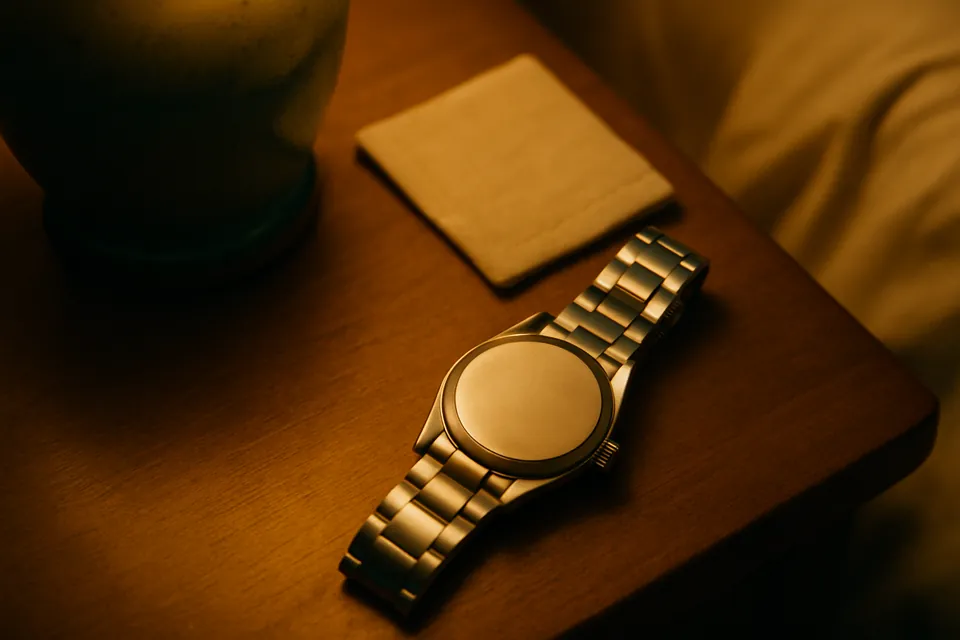
As the post-2022 resale correction settles and buyers get pickier, Rolex looks stronger once the fast-money story fades. The practical appeal is easier to see in plain terms: a watch most buyers recognize at a glance, an extensive authorized service network available through Rolex retailers and affiliates, and a resale path that usually asks for less explanation when the owner decides to sell.
Rolex keeps reinforcing that appeal in public. Ahead of the 98th Oscars at the Dolby Theater at Ovation Hollywood on March 15, it unveiled another Greenroom and tied it to the 100th anniversary of the Oyster, which Rolex presents as the world’s first waterproof wristwatch. Rolex has hosted the Oscars Greenroom since 2016, while its broader Academy partnership dates to 2017, and the Greenroom’s core structure is reused each year. Even the brand theater follows a set pattern, which is exactly the point: Rolex keeps putting the same signals in front of a broad audience until they become familiar.
One Bangkok duplex boutique
That repetition reaches well beyond sponsorship. In February, the largest Rolex boutique in Thailand opened in the Post 1928 precinct at One Bangkok. At 3,230 square feet, it is the first duplex Rolex boutique in Southeast Asia, with private viewing spaces and an authorized service center inside the same address. Verde Alpi marble, fluted wall motifs, walnut wood, bracelet-inspired lighting, and a stucco wall depicting Wat Phra Kaew give the room local detail, but the larger impression is unmistakably Rolex.
Collectors sometimes underrate how useful that kind of consistency is once the purchase is over.
Collectors sometimes underrate how useful that kind of consistency is once the purchase is over. A buyer walking into that Bangkok boutique sees Rolex Professional and Classic timepieces in a setting that lines up with the brand’s broader retail language, then sees service folded into the same environment. That lowers practical friction. When a watch eventually changes hands, the next buyer is dealing with an object that has been sold, serviced, and presented inside a system built to keep it recognizable.
Artisans de Genève dispute
Rolex draws the line just as firmly when someone pushes at the edges of the product. In the Artisans de Genève dispute, the reported Swiss Supreme Court position allowed third-party personalization of customer-owned watches for private use while restricting unauthorized commercial sales and certain uses of Rolex trademarks in advertising. Plenty of enthusiasts enjoy heavily reworked pieces, and some modifications are genuinely interesting on their own terms. Rolex’s stance is still easy to read: it prioritizes trademark control and product consistency over a looser culture of reinterpretation.
Rolex’s legal posture has direct consequences for ownership. Rolex’s policy creates a clearer distinction between factory-original watches and third-party modifications. Dealers benefit from that clarity as well. So do owners who want ordinary maintenance, ordinary paperwork, and a sale process that does not begin with a long explanation of what has been changed.
None of this guarantees a good purchase.
Resale legibility is not price immunity
The One Bangkok boutique’s authorized service center and the Academy partnership that has run since 2017 support familiarity and access, but they do not protect the buyer who overpays for a specific watch, and they do not make every Rolex Professional or Classic configuration equally easy to move later. Resale legibility is not the same thing as price immunity. Softer resale prices simply force buyers to separate the reassurance of a 3,230-square-foot branded retail-and-service environment from the fantasy that any well-known sports watch will rescue a bad entry point.
Rolex still makes a practical case for a lot of buyers because of that distinction. A first-time luxury buyer may want one watch they can wear almost anywhere, then bring back to the same kind of authorized service center Rolex now includes in places like the duplex One Bangkok boutique. An enthusiast buying a daily wearer may want the same thing, even if the rest of the box includes stranger pieces. In both cases, the appeal sits in a framework Rolex keeps repeating: Professional and Classic timepieces presented through familiar boutiques, private viewing spaces, and service under the same roof.
Some collectors will always find that framework too narrow. They want more variation, more room for reinterpretation, more personality at the margins. Rolex can produce exceptional outliers, but its broader posture stays disciplined in a very specific way: repeated visual codes, controlled presentation, and a strong preference for watches that remain plainly identifiable as Rolex at every stage of ownership. If your taste runs toward customized dials, dramatic rework, or authorship shared with an independent modifier, another brand may fit better.
The Greenroom, the duplex Bangkok boutique, and the legal stance around modified watches all point in the same direction. One is a heritage story tied to the Oyster centenary and repeated through an Academy partnership that dates to 2017. One is a physical investment in a 3,230-square-foot retail space with private viewing rooms and on-site brand service.
One is a trademark argument that permits private customization of customer-owned watches while restricting unauthorized commercial sales. Taken together, they show a brand still investing in buyer confidence after the initial sale.
The Rolex thesis
Rolex’s advantage has become easier to appreciate now that speculative heat has cooled. When watches stop looking like effortless trades, buyers pay closer attention to support, presentation, and how easily the next owner will understand the piece. Rolex still benefits from broad recognition, but the more durable advantage sits in the infrastructure around the watch and in the company’s refusal to let the product drift too far from its own image.
The Rolex thesis is fairly simple. Buyers are no longer counting on automatic upside. They are buying into a brand that ties the 100th anniversary of the Oyster to the Oscars Greenroom, reuses that Greenroom’s core structure each year, places authorized service centers inside boutiques such as the first duplex Rolex boutique in Southeast Asia, and draws a legal line between private customization, unauthorized commercial sales, and potentially misleading trademark use. Less excitement, maybe. A watch that stays recognizable, serviceable, and easier for the next buyer to place can be reason enough on its own.