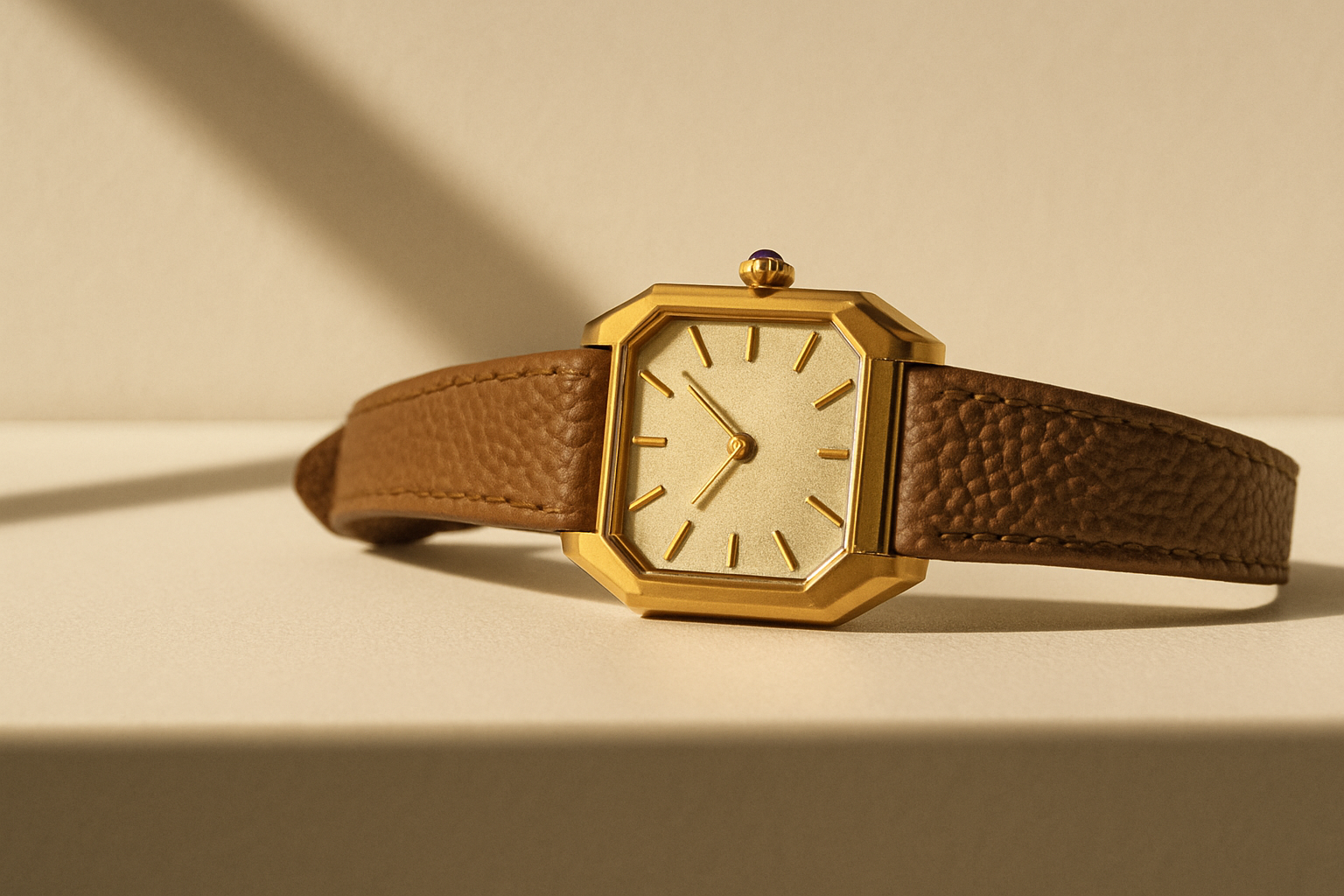
Cartier becomes easier to justify when the watch market cools, but the argument is narrower than the brand’s scale might suggest. The strongest case sits with the shaped watches that already occupy a settled place in watch culture, especially the Tank. In a softer market, buyers tend to gravitate toward watches that are easy to identify, straightforward to wear, and familiar well beyond enthusiast circles. The Tank fits that pattern with unusual ease.
That helps explain why recent commentary has turned back toward shaped Cartier cases rather than treating the whole catalog as equally persuasive. The appeal being described is not novelty. It is proportion, versatility, and enduring design lineage. The Tank remains central to that discussion because it bridges design history and daily use in a way few dress watches manage. It is not being rediscovered so much as re-read under calmer conditions.
That distinction is useful. Plenty of watches look compelling when attention is doing most of the work. Cartier’s better-known shaped models ask less of the market because the design is already settled in the public eye. A Tank does not require much explanation before someone understands what it is. Its rectangular case is recognizable even to buyers who do not follow watches closely, and that familiarity tends to support market recognizability when trading conditions turn selective.
Collectors often speak about value as though price action creates legitimacy after the fact. With Cartier, and particularly with the Tank, the sequence is usually reversed. The watch already has a...
The wear side of the equation is just as important as the cultural side. The Tank stays relevant because it crosses settings cleanly. It can live with tailoring, but it does not depend on formal dress to feel coherent. That versatility sounds obvious until the market gets choosier and buyers begin looking harder at what they will actually wear. A watch with a long design lineage is one thing; a watch that still fits naturally into ordinary use is another. The Tank has both.
Recent coverage frames this return to Cartier in precisely those terms. Attention has shifted toward shaped cases, with the Tank family at the center, because proportion and versatility hold up better than novelty chasing. That is a healthier basis for continued interest. It points to watches people already know how to place within the broader design canon, rather than to references that depend on a sudden burst of auction talk or collector fashion.
This is also where Cartier’s broad name recognition becomes a concrete advantage rather than a vague branding asset. The buyer pool for a core Tank is not limited to seasoned collectors parsing obscure details. People with a general interest in design often understand the watch immediately, and that wider familiarity can support resale legibility. When both enthusiasts and non-specialists recognize the same model family, pricing confidence does not rely entirely on insider enthusiasm.
That does not mean every Cartier benefits equally. In fact, the cooler the market becomes, the clearer the limits look. Cartier’s breadth is part of the challenge. The logic that supports a Tank or another core shaped case does not automatically extend across the full catalog. The current pull comes from watches whose proportions, silhouette, and design lineage are already widely understood. Once you move into less legible lines, or quartz pieces that sit outside the shaped-case conversation, the thesis tightens considerably.
Rare, headline-grabbing Cartiers can complicate this picture. They are useful in one sense because they keep the brand visible and remind collectors how deep the archive can be. But they can also distort judgment. Buyers drawn in by exceptional results or unusual references may start to read the entire brand through those outliers, when the more dependable logic sits elsewhere. Cartier looks strongest when the purchase is anchored in model families people already know, wear, and understand without much effort.
That is why discussion keeps returning to the Tank when dress watches come back into focus. It is a reference point, and not only for collectors. The watch joins historical standing with a shape that remains legible at a glance and a use case that extends beyond formal occasions. In weaker markets, those characteristics tend to hold appeal better than technical one-upmanship or scarcity-driven interest. They give a buyer something more stable than a trend cycle.
There is also a useful discipline in how selective this argument has to be. Saying Cartier holds up in a normalizing market is not the same as saying the name on the dial will support every reference. The real strength is concentrated. Core shaped families fit the current collector reassessment because the reasons to own them were in place before the market shifted: established design lineage, easy identification, and genuine day-to-day usability. That concentration is a feature, not a flaw. It keeps the thesis tied to watches with the clearest market recognizability.
Once speculation stops setting the pace, Cartier’s advantages are easier to see in practical terms. The strongest pieces are not relying on technical novelty or a narrow insider narrative. They are relying on forms that buyers already understand and continue to wear. For anyone looking at the brand under more normal market conditions, that is the useful frame: not blanket confidence across the catalog, but a focused case for the shaped Cartier watches—above all the Tank—that remain easy to own, easy to place, and easier to resell than more fashion-dependent alternatives when the noise drops.